
Electric Vehicle and its Types
Electric vehicles (EV) are one that operate partially or completely on electric power. They run on an electric motor, instead of an internal-combustion engine that generates power by fuels or gases. To address the environmental concerns pertaining to rise in pollution and global temperature, depletion of natural resources, EVs have been emerging as a possible replacement for current-generation automobiles. The concept of EVs has been around for a long time, it has drawn a considerable amount of interest in the past few years amid a rising carbon footprint and other environmental impacts of ICE vehicles.
The EV market is evolving rapidly, and with that the need to diversify the types of vehicles to fit the needs of the consumer. These can range from light vehicle such as two and three-wheelers, four-wheeler vehicles like cars, buses, and trucks.
EVs can be classified into different types based on their power sources. Some operate solely on batteries, while others are plug-in or hybrid models, integrating both an electric motor and an internal combustion engine (ICE). The hybrids allow an increased versatility with an extended range. As the EV market continues to grow and adapt, another noteworthy technology that is continually evolving is the fuel cell technology. It was first introduced in hybrids and has now progressed to all-battery electric vehicles, and it continues to undergo advancements.
Currently, there are four types of EVs as follows:
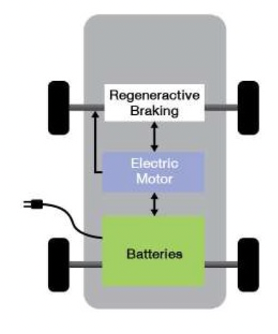
Battery Electric Vehicles
Battery Electric Vehicles (BEVs) are all-electric vehicles that run entirely on battery power. The electricity used to drive the vehicle is stored in a sizeable battery pack which can be replenished by plugging into the electricity grid. BEVs have main components like electric motors, inverters, batteries, control modules, and drive trains.
The electric motor powered by the battery pack propels the vehicle. The faster it goes, the more power it uses. But when you brake or slow down, the motor acts like an alternator, slightly charging the battery. BEVs typically have a driving range of 100 to 400 miles, however it may vary depending on the make and the model of the vehicle.
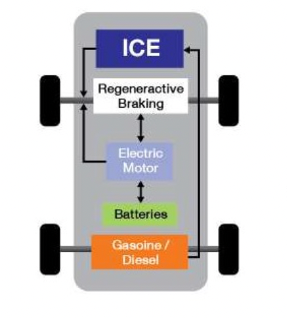
Hybrid Electric Vehicles
Hybrid Electric Vehicles (HEVs) are a smart blend of petrol or diesel power and battery energy. They combine a conventional ICE with an electric motor, offering a more fuel-efficient and eco-friendly driving experience than an ICE vehicle. The engine runs on fuel, while the motor draws electricity from batteries. Both the engine and electric motor work in tandem to propel the vehicle.
Like BEVs, HEVs also utilize a regenerative braking system to recharge their batteries but HEVs do not require plugging in for recharging. Although they still need to be filled up with petrol, HEVs can travel longer distances compared to a regular petrol car on each tank.
With their innovative combination of technologies, HEVs offer a compelling option for those seeking improved fuel efficiency and reduced emissions.
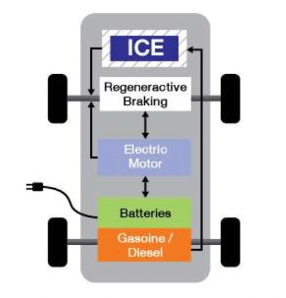
Plug-in Hybrid Electric Vehicles (PHEV)
Plug-in Hybrid Electric Vehicles (PHEVs) offer the best of both worlds with their dual power sources. They offer the flexibility to choose between conventional fuel like petrol or alternative fuel like biodiesel alongside a rechargeable battery pack. The main components of PHEVs include an electric motor, engine, inverter, battery, fuel tank, control module, and a battery charger for onboard models.
PHEVs make efficient use of regenerative braking to recharge the battery when braking. By supplementing the engine’s power with the electric motor, PHEVs can use smaller engines, achieving better fuel efficiency without compromising performance. These can travel between 20 and 40 miles on electricity alone.
Unlike conventional hybrids, PHEVs can be charged externally, giving you the option to run in all-electric mode, where the motor and battery supply all the energy, or hybrid mode, utilising both electricity and petrol/diesel. The ability to recharge externally provides PHEVs with greater driving distances on battery power alone, making them a practical choice for eco-conscious drivers seeking a versatile and sustainable transportation option.
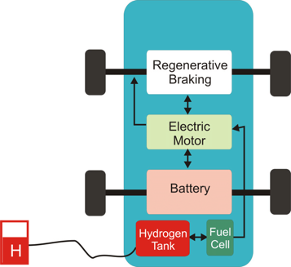
Hydrogen or Fuel Cell Electric Vehicles (FCEVs)
FCEVs, employ ‘fuel cell technology’ to generate the electricity required to run the vehicle. FCEVs use a propulsion system like that of electric vehicles, where energy stored as hydrogen is converted to electricity by the fuel cell. They convert fuel (hydrogen) into electricity through an electrochemical reaction with oxygen which powers the electric motor.
The most common type of fuel cell for vehicle applications is the polymer electrolyte membrane (PEM) fuel cell. The main components of FCEVs include an electric motor, fuel-cell stack, hydrogen storage tank, battery with converter, and controller.
FCEVs generate the electricity required to run the vehicle, making them an innovative and environmentally conscious choice for the future. They are an emerging technology in Australia and not yet widely available for everyday use.